

Based on your location, we think there is a website better suited to you.

Tate Global AMER
Case Studies

TQEC, Bristol

Sector:
Commercial Office
Location:
Bristol, UK
Architect:
Feilden Clegg Bradley Studios (FCBS)
Tate Uk Full Width Image Tqec Case Study

Tate Creates Floor with Complex Design Finish for Landmark Development 

The University of Bristol’s new Temple Quarter Enterprise Campus is considered both a landmark regeneration scheme for the city and one of the UK’s most significant urban renewal projects. 

When finished, the Campus will accommodate 4,500 students and 650 staff and help cement the University’s position as one of the foremost academic establishments in the world.  But its importance will extend far beyond education as the campus will also serve as a focal point for community engagement and act as a catalyst to strengthen Bristol city centre’s role as a leading regional economic hub.  

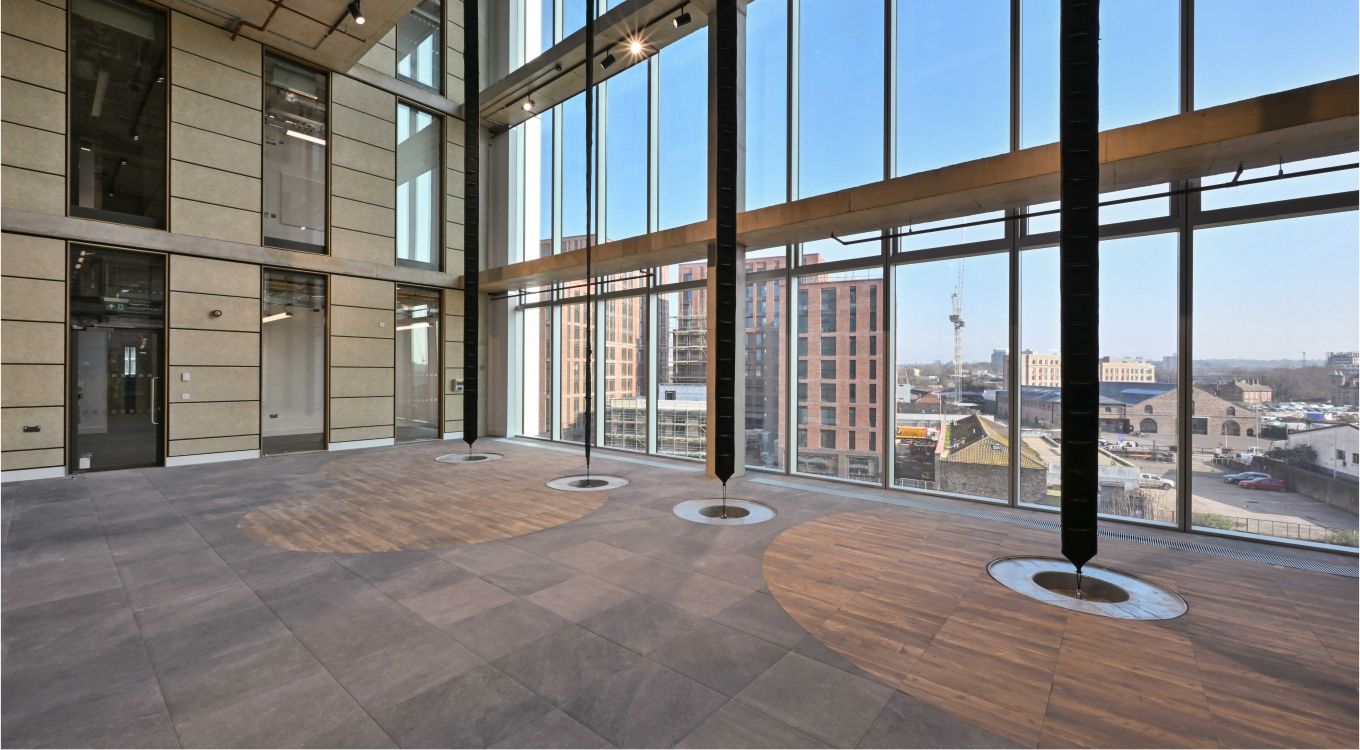
The first phase of the project, known as TQA1, included the construction of a new six-storey 38,350m² academic building. This required a beautiful, technically robust flooring solution capable of matching the architectural ambition and a complex design aesthetic while allowing easy access to building services within the void. 

Porcelain Raised Access Flooring Solution

Tate was commissioned to deliver and install 27,954 m² of raised access flooring, consisting of four panel types: RMG Medium Grade, RHG Heavy Grade, FDEB H, and pre-bonded porcelain panels that included a bespoke finish, specifically designed for the scheme. 

Tate’s pre-bonded porcelain finish is factory-applied to the access floor panel under controlled conditions, delivering a high quality, durable surface that arrives on-site ready for installation.

It combines structure, access and an architectural finished floor within a single product, eliminating the need for traditional wet trades such as screed and tiling while also ensuring consistent quality throughout the building. 

Bespoke Hybrid Panels for Complex Floor Patterns

TQA1’s intricate floor pattern required the use of bespoke hybrid panels that incorporate more than one finish across a single panel. Manufactured as individual one-off components, the process of creating hybrid floor panels needs detailed creative coordination and precision production (using water jet cutting) in order to achieve seamless transitions, including curved geometries within the same panel footprint.  

For the TQA1 project, the jigsaw-like manufacturing process relied on close collaboration between Tate’s in-house teams of experts and the TQA1 architects.  Once the architects had specified the design, Tate’s sales team researched and recommended a bespoke solution.  This was then handed over to Tate’s design managers who ensured that the design intent was followed through to manufacturing and finally to site install, which was expertly managed by the company’s contracts team. 

Frequently Asked Questions

Pre-bonded floor panels combine the structural performance of a raised access floor with a factory-applied finished surface, including porcelain, stone, terrazzo, vinyl or other architectural materials. 

This approach improves quality control, reduces the number of on-site trades and programme complexity, and delivers a durable, low-maintenance floor with full access to underfloor services. 

Yes. Tate’s bespoke hybrid panels mean two or more design finishes can be integrated within one panel, including curved transitions.  

This allows designers and architects to create complex floor patterns, matching any complex design aesthetic, while still giving full and easy access to underfloor building services.