
Based on your location, we think there is a website better suited to you.

Tate Global America
Knowledge Articles

Showcasing rainwater harvesting at Tate’s Hull manufacturing facility

Reservoirs in England and Wales are at record lows thanks to the driest spring for 132 years. According to The Environment Agency this isn’t just a short-term issue but a long-term challenge which is likely to get worse if we don’t take action.

They advised: “England faces a 5 billion litre a day shortfall for public water supplies by 2055 – and a further 1 billion litre a day deficit for the wider economy.

“Climate change, population growth, and environmental pressures are impacting supplies with the predicted shortfall equivalent to a third of our current daily use.”

While this highlights the current overwhelming strain we are placing on our potable water supplies there are actions we can take to help alleviate some of the pressures. For example, much of the water we use residentially, as well as by commerce and industry, does not need to be potable quality.

By managing our water resources better we can reduce the impact of future droughts - and lower the risk of localised flooding by reducing peak discharge into stormwater systems.

Planet Passionate

How Tate is Incorporating Rainwater Harvesting

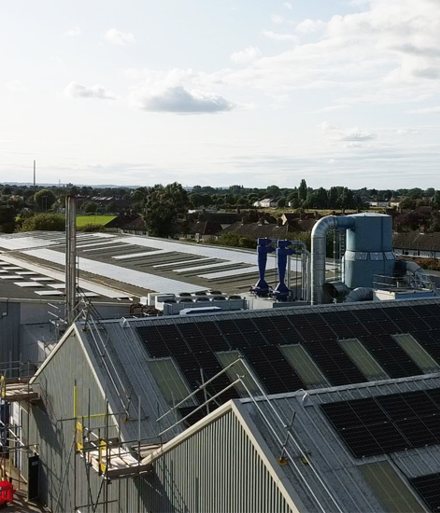
At Tate’s manufacturing facility in Hull we are taking practical steps to build resilience.

Our rainwater harvesting system captures, filters, and stores rainfall for use in our 22 toilets, significantly cutting our reliance on mains supply.

Since launching our system in 2021, we have tripled capacity. In 2024 alone, we harvested 2.9 million litres, to meet 17% of our site’s total water demand.

To highlight the importance of this work, our vast rainwater storage tank has recently been wrapped in Kingspan’s Planet Passionate colours, giving the system an eye-catching presence on site and helping to spark conversations about sustainability across the business.

Rainwater harvesting is a simple and effective solution that supports resource efficiency, business resilience, and environmental stewardship.

When scaled up, small changes like these can deliver real impact.