





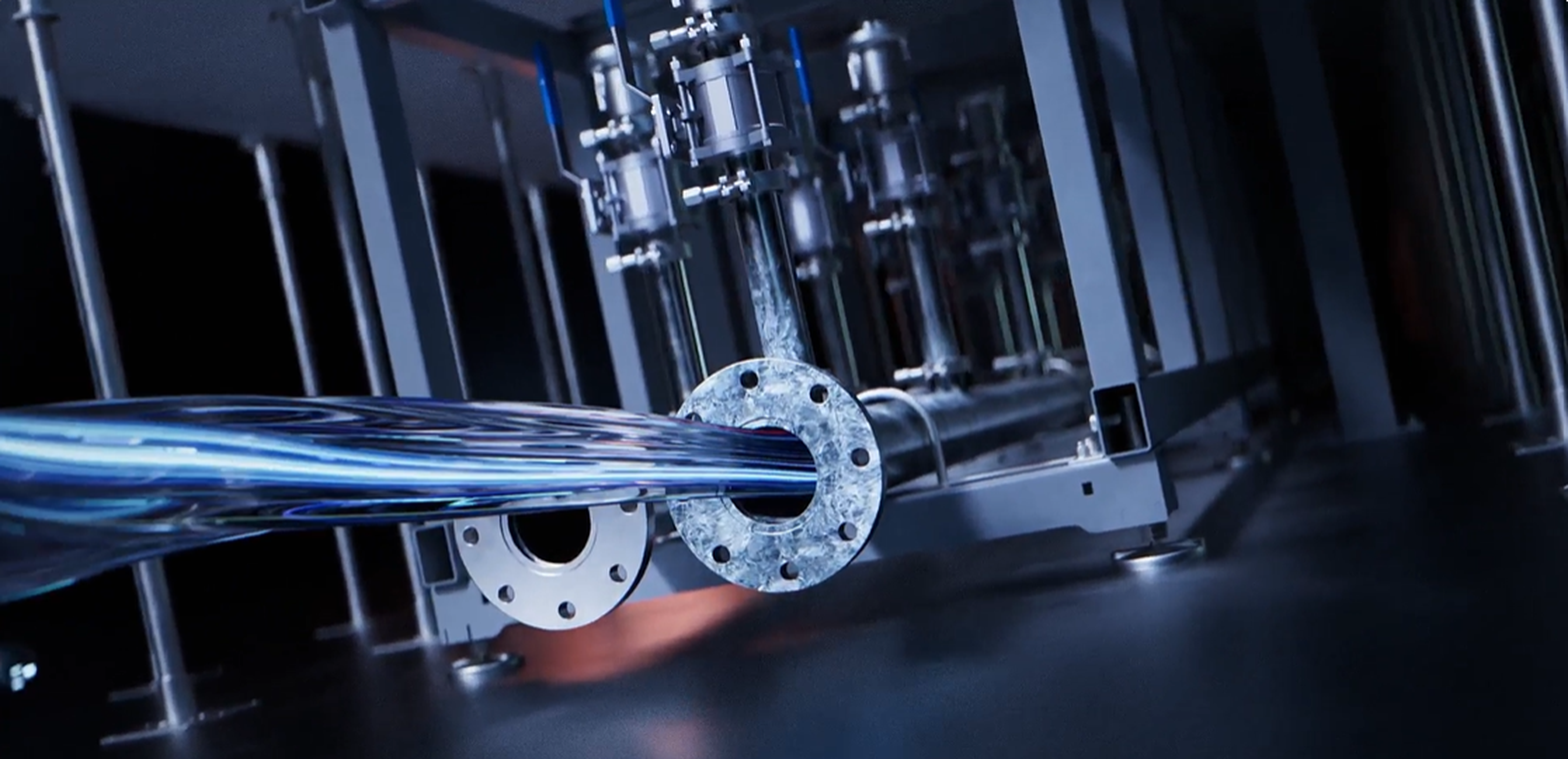
Data centre design is undergoing a fundamental transformation, with higher density infrastructure driven by the rapid growth of AI, machine learning and high-performance computing. Is liquid cooling the industry's answer to these increased output demands?
Data centre operators are under increasing pressure to deploy more computing power within existing footprints, driving rack and server densities to unprecedented levels that traditional air-cooling systems were never designed to support. The extreme heat generated by this high-density equipment is one of the biggest challenges currently facing the industry.
When power levels have been elevated to this extent, removing heat in an efficient way becomes a critical operational challenge. Conventional air cooling requires larger volumes of airflow, more substantial cooling infrastructure and higher energy consumption to maintain safe operating temperatures. With air cooling alone proving to no longer be a sufficient option to mitigate these increased thermal loads, liquid-cooling technologies have emerged as key enablers of future data centre growth.
The Liquid Cooling Difference
Liquid cooling works because liquids are significantly more effective at transferring heat than air. By capturing thermal energy directly from processors, GPUs and other high-performance components, liquid-cooling systems can manage far greater heat loads while using less energy than traditional air-based approaches.
Several liquid-cooling approaches are now being deployed across the industry. Direct-to-chip cooling uses cold plates connected directly to processors and accelerators, while immersion cooling submerges hardware in specialised dielectric fluids. Both approaches enable much higher rack densities than conventional air cooling and provide a pathway for supporting the next generation of AI infrastructure.
This transition is already reshaping infrastructure requirements. Industry experts speaking at a recent CIBSE Journal roundtable held in collaboration with Tate noted that AI is driving rack power requirements from around 20kW towards 130kW and beyond, pushing facilities towards liquid-cooling architectures capable of supporting these extreme densities. The same discussion highlighted liquid cooling's ability to reduce energy consumption, minimise physical footprint requirements and support heat-recovery opportunities.
Beyond thermal performance, liquid cooling can help operators improve overall efficiency by reducing dependence on energy-intensive airflow management and large mechanical cooling systems. This supports both operational resilience and sustainability goals as organisations seek to reduce their environmental impact while continuing to scale digital infrastructure.
Building Future-Ready Data Centres with Tate
Successful data centre projects depend on more than simply installing new cooling technologies. Operators need integrated infrastructure that supports power, cooling, containment and distribution systems working together as one cohesive solution.
Through its liquid-cooling solutions portfolio, Tate is helping data centre operators to prepare for the future. Our infrastructure is designed to support direct-to-chip cooling deployments, including manifolds and integrated containment systems that distribute coolant efficiently throughout high-density environments. These solutions are designed to simplify the transition to liquid cooling while supporting reliable performance for AI and high-performance computing workloads.
We're attuned to the fact that many facilities must balance existing operations with future expansion, and so our approach focuses on supporting both new-build and retrofit projects, enabling operators to increase capacity flexibly without compromising uptime.
Contact us to discover how our integrated solutions empower data centre operators to build high-performance facilities capable of supporting the next generation of digital infrastructure.