



As the demands of modern computing continue to evolve, traditional air-cooling methods are being rapidly outpaced by more advanced liquid cooling solutions, particularly in high-density data centres. From artificial intelligence (AI) and machine learning (ML) to high-performance computing (HPC), the latest IT equipment is generating heat at levels that traditional cooling methods can no longer effectively manage.
In response to these challenges, liquid cooling is emerging as the preferred solution for managing thermal loads. This technology is gaining momentum due to its superior thermal transfer efficiency, lower energy consumption, and its ability to support higher rack densities—all critical factors in today’s fast-paced, AI-driven data environments.
What is a Liquid Cooling Manifold?
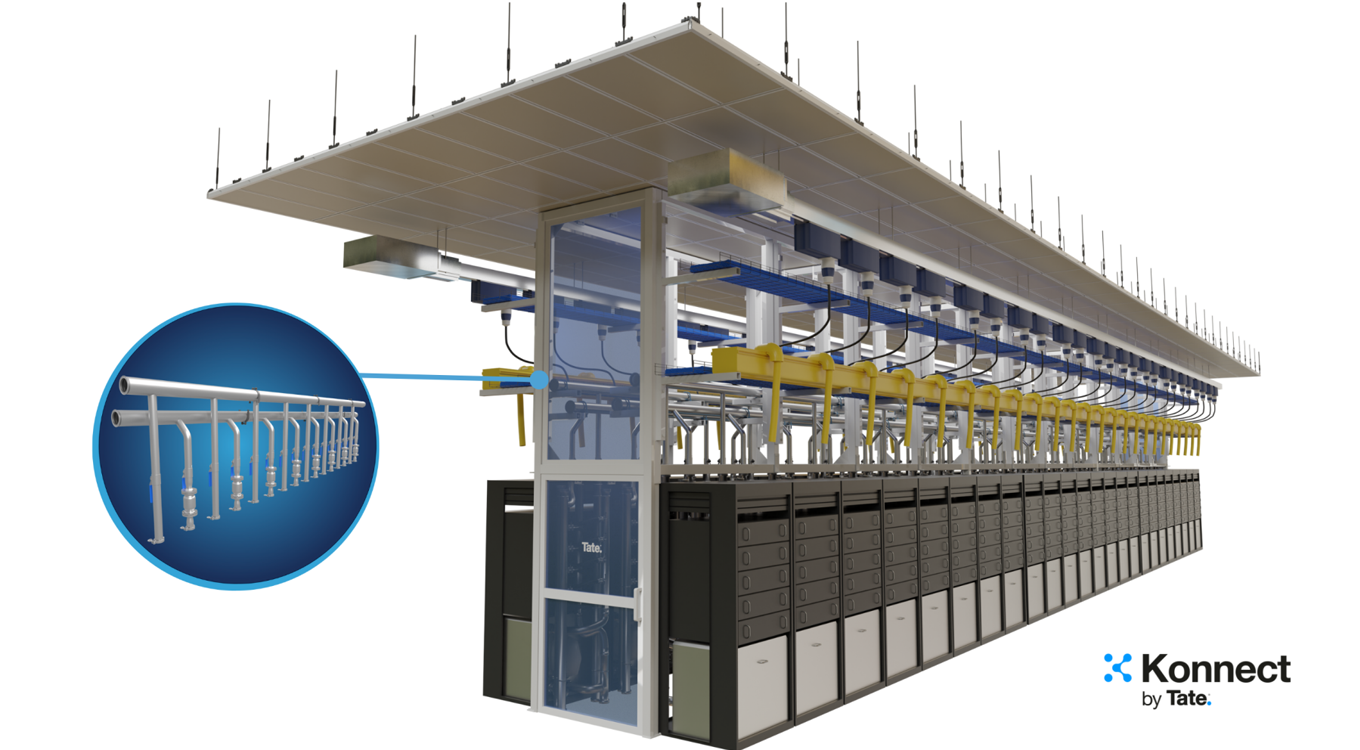
A liquid cooling manifold is a key component in modern cooling systems, acting as a distribution hub that channels coolant to and from IT equipment. These manifolds ensure that heat is evenly and efficiently dissipated across servers by regulating critical factors like flow, pressure, and temperature. This helps to maintain stable operational conditions, preventing localized overheating and ensuring the continuous performance of systems in mission-critical data centres.
Key Benefits of Liquid Cooling Manifolds
Improved Thermal Regulation:
Manifolds help ensure even cooling across all connected components, effectively reducing hot spots and enhancing the performance of central processing units (CPUs) and graphic processing units (GPUs).
Enhanced System Reliability:
By precisely controlling coolant flow, manifolds reduce mechanical stress on systems, extending their lifespan and minimizing the risk of failure or unexpected downtime.
Scalability:
As data centre infrastructure expands, manifold-based liquid cooling systems allow for easy scalability. This flexibility means that cooling loops can be expanded without requiring major system overhauls, allowing operators to grow their data centres with minimal disruption.
Greater Energy Efficiency:
With the ability to optimize coolant flow rates and pressure, liquid cooling manifolds help improve power usage effectiveness (PUE), leading to lower operational costs and better energy efficiency.
Hybrid Cooling with Hot Aisle Containment (HAC) Systems
When integrated with Hot Aisle Containment (HAC) systems, manifolds form a powerful hybrid cooling solution that combines the best of both liquid cooling and traditional airflow strategies. HACs, known for their advanced airflow management capabilities, enhance the effectiveness of liquid cooling systems by ensuring that cool air is directed to the right areas while hot air is efficiently exhausted.
This combination not only improves cooling precision but also simplifies deployment. Pre-integrated manifolds reduce on-site complexity, streamlining the installation process and enabling smoother transitions between air-cooled and liquid-cooled zones.
The Future of Liquid Cooling in Data Centres
As power densities continue to rise, liquid cooling systems—particularly those with integrated manifolds—are expected to play an increasingly central role in the thermal management strategies of data centres. Manifolds offer smarter, more efficient coolant distribution, which can significantly reduce operational costs and improve overall performance.
For data centre operators planning new builds or retrofits, adopting manifold-based liquid cooling systems promises to deliver unmatched performance, scalability, and adaptability in the face of rising computing demands.
As the demand for AI-driven workloads grows, the importance of innovative cooling solutions, like those provided by Tate, becomes even more apparent. To stay ahead of the curve, operators are encouraged to explore the potential of manifold-based liquid cooling systems and connect with experts in the field.