


 AMER
Insights & Resources
Knowledge Hub
Can Modular Construction Solve the Data Center Delivery Challenge?
Demand for data center capacity is accelerating, but bringing that capacity online is becoming increasingly complex.
Projects are growing in scale and technical complexity, while delivery teams face pressure from ambitious schedules, constrained supply chains and shortages of skilled labor. In its ‘Data Center Trends 2026’ report, Accenture describes ambitious construction timelines as the norm in 2026, identifying standardized design and modular construction as important approaches to reducing risk and accelerating builds.
Against that backdrop, Tate believes the industry must look beyond individual product performance and consider how the entire construction model can evolve to support faster, more predictable infrastructure delivery.
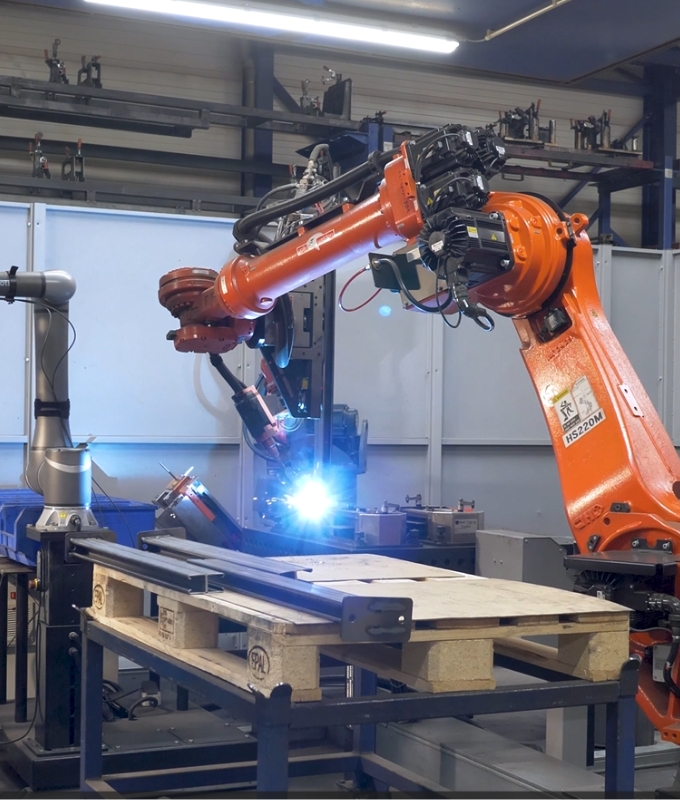
Modular and off-site construction offers one compelling answer. Moving a greater proportion of engineering, assembly, integration and testing into controlled manufacturing environments can reduce the amount of work that needs to happen on-site. This approach reduces complexity, improves program certainty and minimizes project risk. In short, it offers the industry an opportunity to rethink where, when and how critical data center infrastructure is delivered.
Moving Complexity Away from the Job Site
Speed is an obvious attraction of modular construction, but the more significant change is where work happens.
Traditional construction relies on numerous trades and systems coming together on site, often within a tightly sequenced program. As projects become larger and more technically demanding, successfully coordinating these aspects becomes increasingly challenging. At the same time, the data center sector is competing for skilled trades in a market where labor availability is already under pressure.
Off-site construction changes that dynamic. Structural, mechanical and electrical infrastructure can be engineered, assembled, integrated and tested before it reaches the project site. Deployment speed, skilled labor availability, quality consistency, construction risk and project complexity are among the challenges this approach can address.
This is particularly relevant when considering the use of scarce, specialist labor. Rather than relying on every stage of integration taking place at the final construction site, more work can be transferred into a manufacturing environment. For senior project stakeholders, the important point is not simply a reduction in labor: it is the potential to make better use of labor, shifting repeatable activities away from a busy construction environment while reserving site-based skills for the work that genuinely needs to happen there.
From Faster Construction to More Predictable Delivery
While delivery speed is and will remain a huge factor across the industry, repeatability and consistency are equally important.
Here, moving work off-site creates a second advantage: infrastructure can be assembled and tested in a more controlled environment before arriving for installation. At Tate, our pre-engineered modular containment solutions are assembled, integrated and tested in a controlled factory environment prior to deployment. Mechanical and electrical verification, functional testing and integrated system checks are completed before installation, reducing rework, disruption and program risk on-site.
A structured modular approach also lends itself to repeatability. Once designs and integration processes are established, they can be applied across multiple phases or locations while still allowing projects to respond to specific site requirements.
For an industry looking to deliver infrastructure at unprecedented scale, this may ultimately be the more important evolution. Modular construction should not be viewed simply as relocating construction activity. Its true value lies in industrializing data center delivery, shifting engineering, integration, testing and quality assurance into controlled environments before infrastructure arrives on-site.
As pressure on speed, quality and skilled labor intensifies, the competitive advantage lies with those who can remove complexity from the construction site. The next step in accelerating data center delivery is less about speeding up on-site construction, and more about rethinking how much of it needs to happen on-site at all.
Contact us to discover how Tate's modular solutions are simplifying delivery and accelerating deployment for the next generation of data center infrastructure.